Windsurf
by Cognition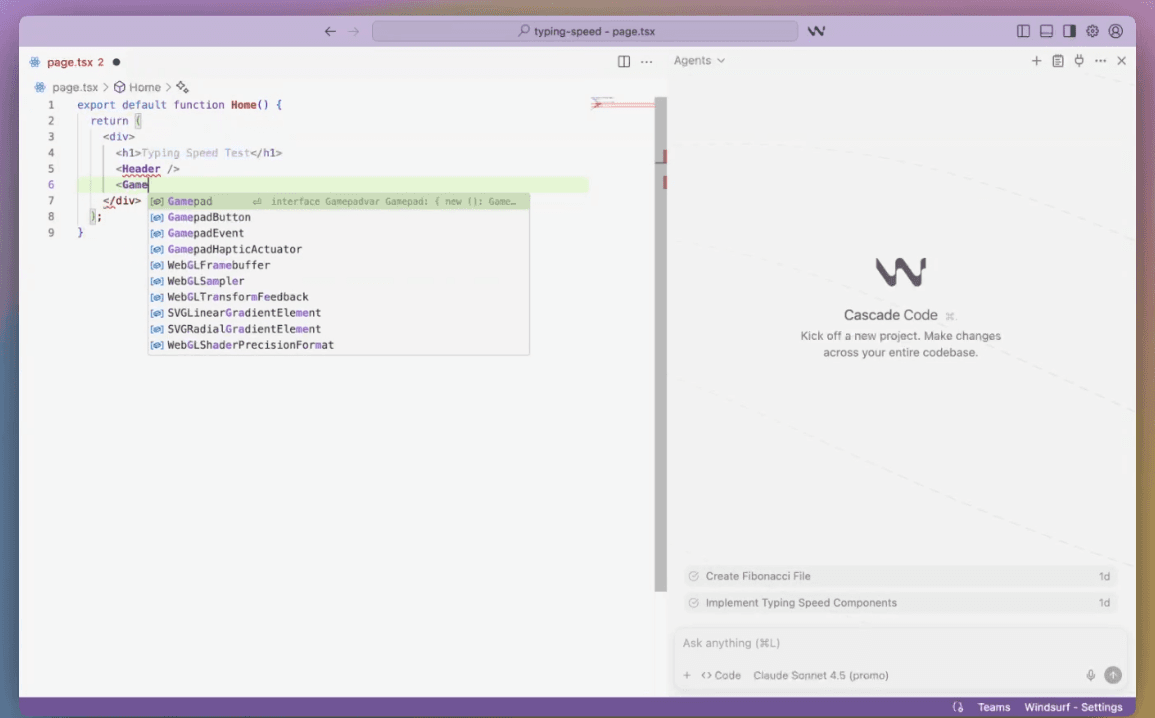
At a glance
Price
$20/mo
Free tier
Yes
Platform
Desktop app (VS Code fork), JetBrains plugin
Best for
Enterprise teams needing compliance
Learning curve
Easy
Last update
2026-03-22
Our take
Editorial verdict · We Did The Homework
Verdict
A capable enterprise-forward AI coding IDE with genuine compliance depth and a collaborative agent model. The Cascade agent and codebase indexing are strong where it counts. Reliability and pricing clarity are not. The technical foundation is solid; the operational experience isn't quite there yet.
What it is
Windsurf entered this market as Codeium, rebranded under the Cognition umbrella, with a clearer positioning: VS Code-based, enterprise-compliant, with an agentic workflow built into the IDE rather than bolted onto it. The compliance pitch is genuine. SOC 2 Type II, FedRAMP High path, HIPAA readiness, EU data residency, and subprocessor transparency documentation that goes deeper than anything Cursor or GitHub Copilot publishes. For regulated industries, that list opens doors that close on everyone else.
The Cascade agent
The Cascade agent is the tool's other real strength. Unlike Claude Code running autonomously in a terminal, Cascade operates inside the IDE with checkpoints that surface before each phase of execution. It plans tasks, creates todo lists, uses terminal commands and web search, and pauses for review before proceeding. We tested it on a medium-sized TypeScript project. Cross-file reference accuracy was noticeably better than what GitHub Copilot returned on the same codebase.
Onboarding
Onboarding is smooth. Import your VS Code settings, pick your keybindings, and you're working in minutes. It doesn't feel like switching tools. That matters for team rollouts.
Reliability concerns
The reliability is where confidence starts to slip. Agent sessions slowed down during longer runs. Autocomplete suggestions occasionally felt stale or out of context. Community reports on forums and Trustpilot (currently at 2.0/5) consistently flag stability during agent sessions and a billing situation that's generated real frustration. Windsurf migrated from credits to quota-plus-overage billing in March 2026, but the documentation hasn't caught up — usage docs still reference old credit amounts while the pricing page shows new tiers.
Extension gap
The extension situation is a real gap. Windsurf can't install extensions through any marketplace. If you depend on specific third-party extensions, you're blocked. That's a meaningful flexibility cut for a tool positioned as a VS Code replacement.
Versus Cursor
Compared to Cursor, Windsurf trails on tab completion quality, model flexibility, and community ecosystem size. Cursor offers 20-plus models with BYOK; Windsurf routes through its own infrastructure. Windsurf's advantage is on the enterprise side, where governance documentation is unusually detailed and deployment options include cloud, hybrid, and self-hosted.
Our call
Windsurf is the right call for teams where compliance isn't optional. Individual developers who want the fastest completions or the deepest agentic capabilities will find better options in Claude Code or Cursor. If Cognition can stabilize reliability and sort out the pricing documentation, there's a genuinely strong tool here. Right now, the operational experience doesn't match the architectural ambition.
What stands out
Cascade Collaborative Agent
An IDE-native agent that plans multi-step tasks, creates checkpoints, and executes with human review loops. Cascade uses tool calls, terminal commands, web search, and MCP integrations — all surfaced inline rather than in a separate terminal. The planning mode produces editable todo lists before writing code.
AST-Entity Codebase Indexing
RAG-based retrieval with AST-entity chunking indexes your codebase at the structural level, not just text. Local and remote indexing options are available, and a Fast Context retrieval system pulls relevant code into agent and completion contexts. This is the engine behind Windsurf's strong cross-file suggestions.
Enterprise Compliance Stack
SOC 2 Type II certified with documented FedRAMP High and HIPAA readiness paths. Zero data retention is default on team and enterprise plans. Deployment options include cloud, hybrid, and self-hosted, with EU (Frankfurt) data residency. Subprocessor transparency and data-flow documentation are unusually detailed.
Tab + Supercomplete System
Beyond standard autocomplete, Supercomplete predicts multi-line edits and intent, while Tab-to-Jump and Tab-to-Import reduce navigation friction. The system aims for flow-state coding where the AI anticipates your next move across files, not just the current line.
Multi-Cascade Sessions
Run concurrent Cascade agent sessions in parallel within the same IDE. Useful for tackling independent tasks simultaneously, though same-file edits across sessions can produce race conditions — a documented trade-off to be aware of.
Pros & cons
Pros
Cons
Who it's for
Pricing
Free
$0
- Tab autocomplete
- Limited Cascade agent usage
- Basic model access
Pro
$20/mo
- Quota-based Cascade usage
- Multi-model access (OpenAI, Anthropic, Google)
- 2-week free trial included
Max
$200/mo
- Highest individual usage quotas
- Full model catalog access
- Priority performance
Teams
$40/user/mo
- Centralized billing and analytics dashboards
- Admin model and policy controls
- Conversation sharing and PR review automation
- Zero data retention by default
Enterprise
Contact Sales
- SSO/SCIM and RBAC access controls
- Hybrid and self-hosted deployment options
- FedRAMP High and HIPAA-compliant posture
- EU (Frankfurt) data residency option
- Command allow/deny governance policies
Limitations to know
Bottom line
Choose Windsurf if your team needs an AI IDE that checks enterprise compliance boxes no other tool can match. Skip it if you prioritize agent reliability, inline completion quality, or pricing transparency. Cursor and Claude Code are stronger on all three today.